Research outcomes
Impedance Quatification
The study focuses on characterizing variable impedance of the human arm during free movement and manipulation tasks. A planar parallel mechanism (PPM) with Variable Stiffness Actuators (VSAs) is developed for impedance estimation via perturbation method. The study will use Lagrange equations to create mathematical models for constrained multibody systems, incorporating the mechanics of the human arm and exoskeleton dynamics.
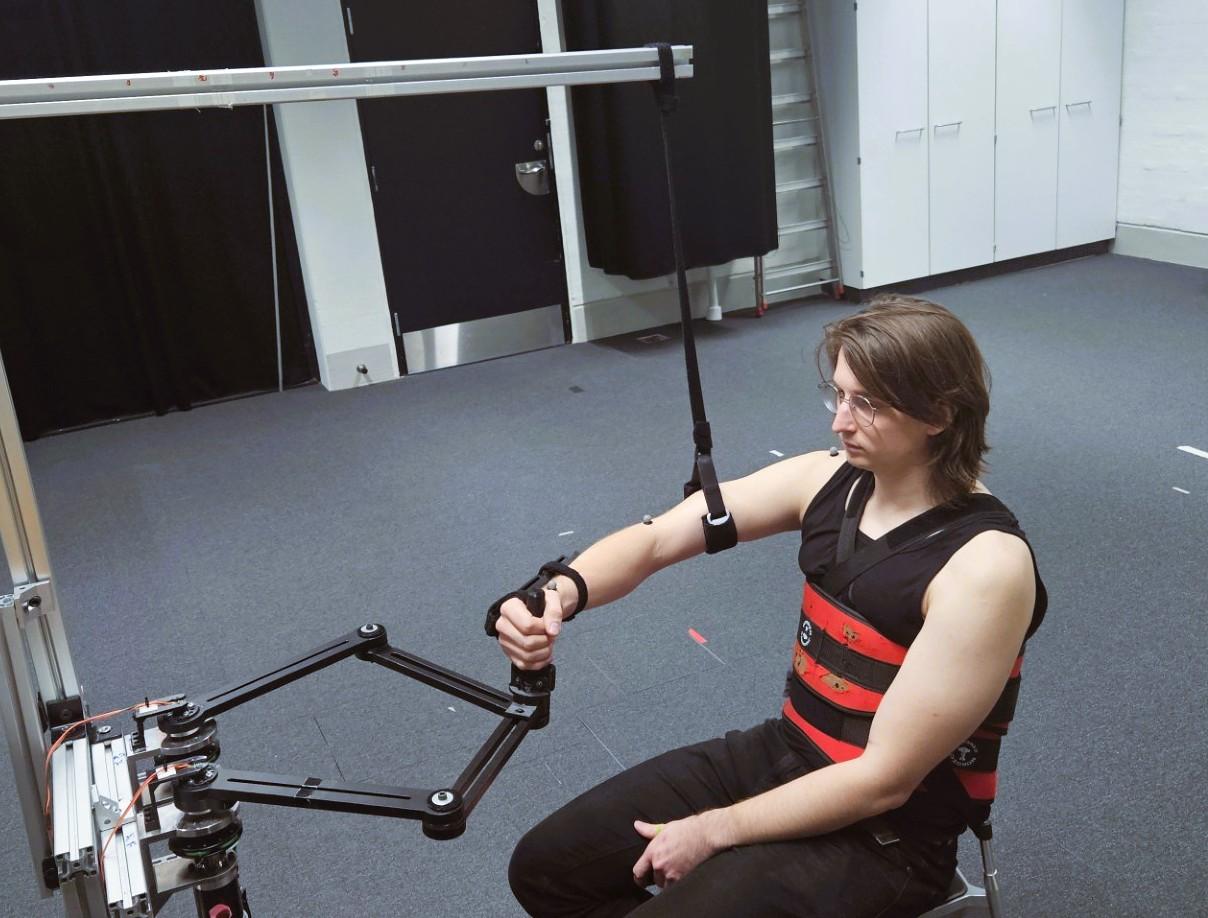
Exoskeleton
Mechanical Design
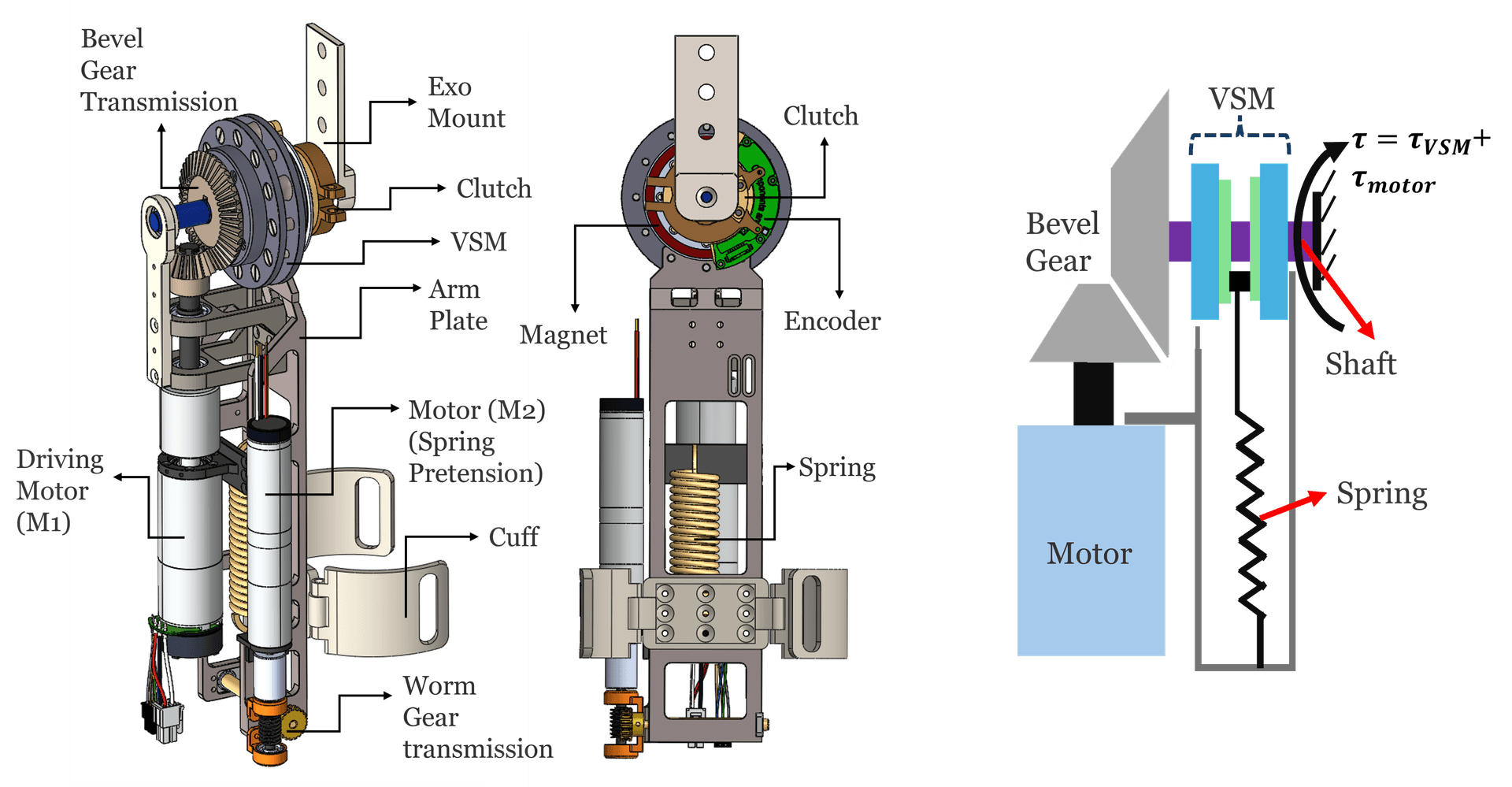
The new exoskeleton design improves energy efficiency by using a passive torque generator together with an active motor. This hybrid system allows the actuator stiffness to be adjusted by controlling the motor torque. A genetic algorithm was used to optimize the design so that the system can effectively support external loads while assisting the human arm. The motor and arm move together through a bevel gear transmission. A clutch and coupling mechanism allows the system to operate in multiple modes, including passive, motor-driven, hybrid, and free motion. This flexibility helps evaluate the advantages of hybrid actuation in reducing energy use while providing the required shoulder assistance.
Mechanical Tests

Mechanical tests were performed to evaluate the torque performance and structural behavior of the exoskeleton prototype. During these experiments, the system was mounted on a fixed test setup to ensure controlled and repeatable measurements. The tests were conducted without human subjects and focused only on the mechanical performance of the device.
The experiments examined how the hybrid actuation system generates assistance at the shoulder joint. The passive torque generator based on the Variable Stiffness Mechanism (VSM) was tested together with the active motor to observe how both components work in parallel.
The results confirmed that the system can generate the required assistive torque while maintaining stable motion. The passive mechanism provides part of the required torque, which reduces the load on the motor.
These mechanical tests helped validate the overall design and demonstrated that the hybrid approach can improve efficiency while maintaining reliable mechanical performance.
Energy Efficiency
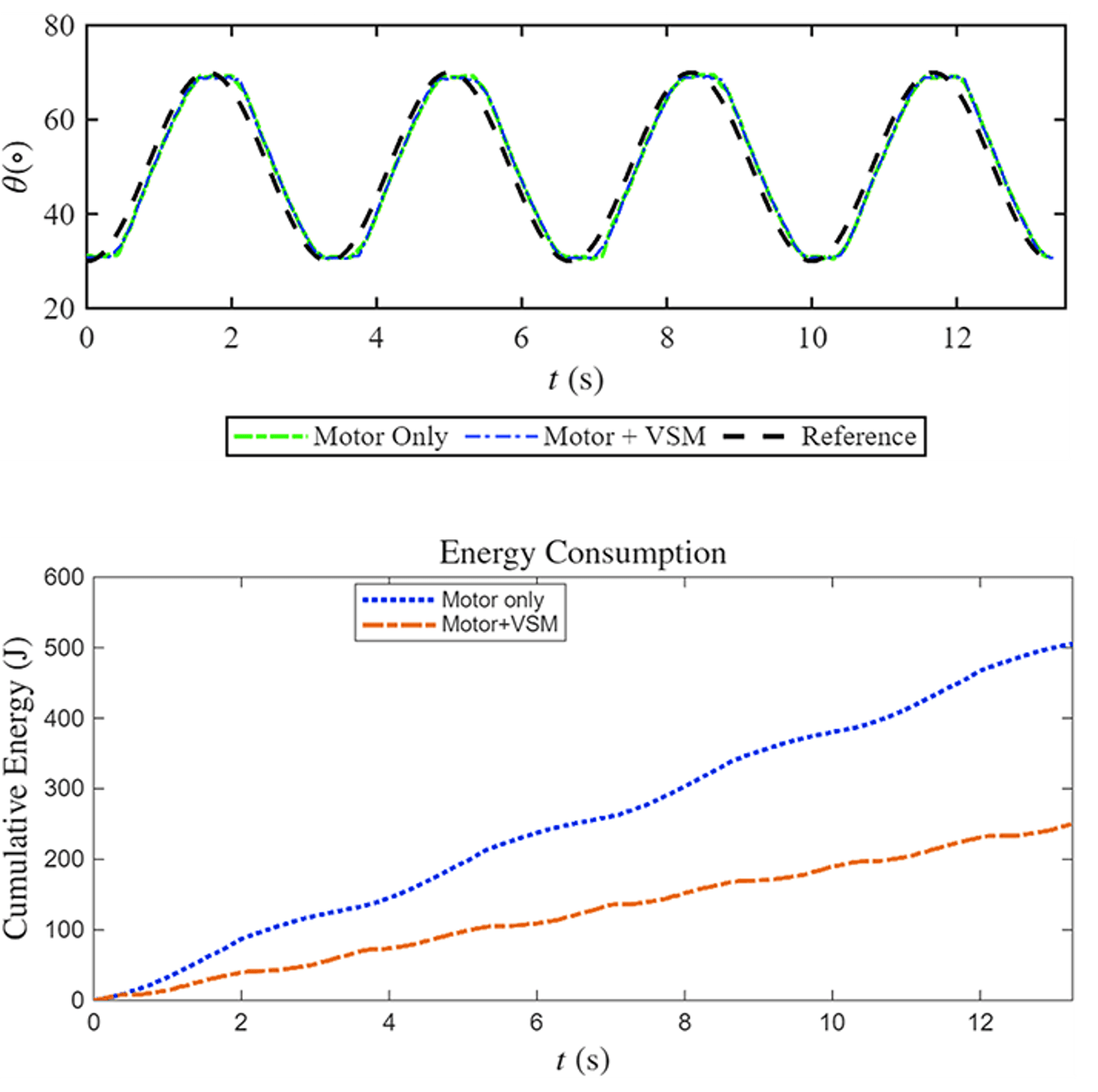
Energy efficiency tests were carried out on the exoskeleton prototype to examine how the hybrid actuation system affects power usage. The experiments were performed with two different loads while comparing two operating modes: one where the passive torque generator was active and another where it was disabled.
During the tests, the exoskeleton was commanded to repeatedly follow a smooth shoulder motion using a closed-loop control system. This allowed the system to perform consistent movements while measuring the electrical power required by the motor.
The results showed that when the passive torque generator was engaged, the motor required significantly less energy to perform the same movement. On average, the system reduced energy consumption by about 50% for the lighter load and around 40% for the heavier load.
These results demonstrate that combining a passive variable stiffness mechanism with an active actuator can greatly improve energy efficiency. This approach can potentially reduce motor size, extend battery life, and make future exoskeleton systems lighter and more practical for real-world use.
Human Subject Evaluation
A human subject study was conducted to evaluate the performance of the proposed shoulder exoskeleton under three assistance conditions: Hybrid Mode, Motor-Only Mode, and No-Assist Mode. A total of 14 healthy participants took part in the experiment.
The tests were performed in a fixed-base experimental setup, where participants executed shoulder movements while interacting with the exoskeleton. Surface electromyography (EMG) was used to assess muscle activity and investigate the influence of different assistance strategies on muscular effort.
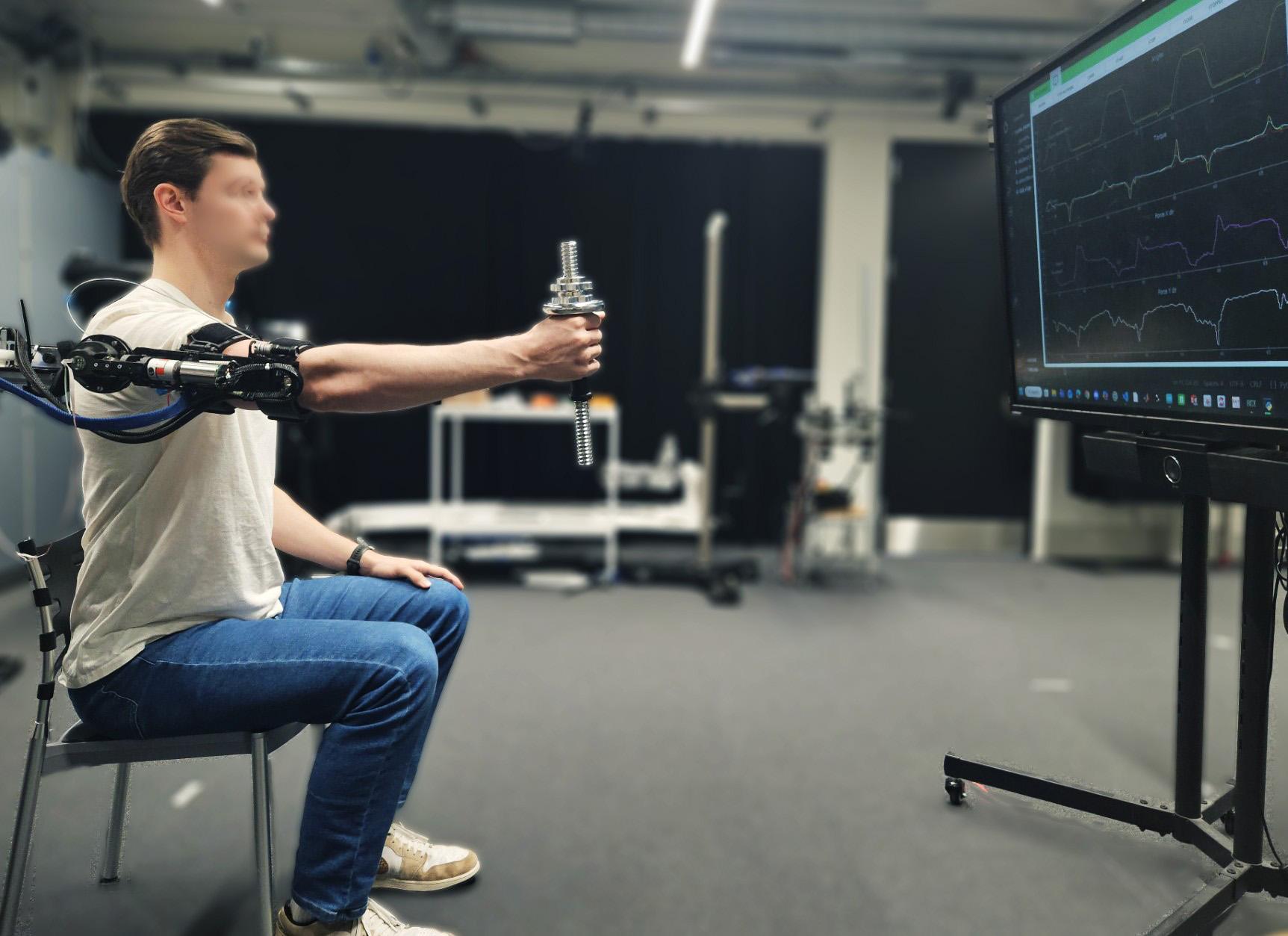
EMG sensors were placed on four major upper-body muscles involved in shoulder motion and stabilization:
Anterior Deltoid (AD)
Middle Deltoid (MD)
Pectoralis Major (PM)
Upper Trapezius (UT)
Muscle activation data were collected and compared across the three operating modes. The objective of the study was to evaluate the effectiveness of the hybrid assistance strategy in reducing muscular effort while maintaining natural shoulder movement. The experimental results provide valuable insights into human–exoskeleton interaction and contribute to the development of variable-impedance assistive systems for upper-limb support.
Wearable Hybrid Shoulder Exo Prototype
Photographs of the VIEXO prototype worn by a participant during both resting and loaded configurations, viewed from posterior and lateral perspectives. The system is anchored to the torso through a contoured harness and lumbar belt. At the same time, the upper-arm cuff aligns the actuator's rotational axis with the glenohumeral joint to support natural shoulder flexion and extension.
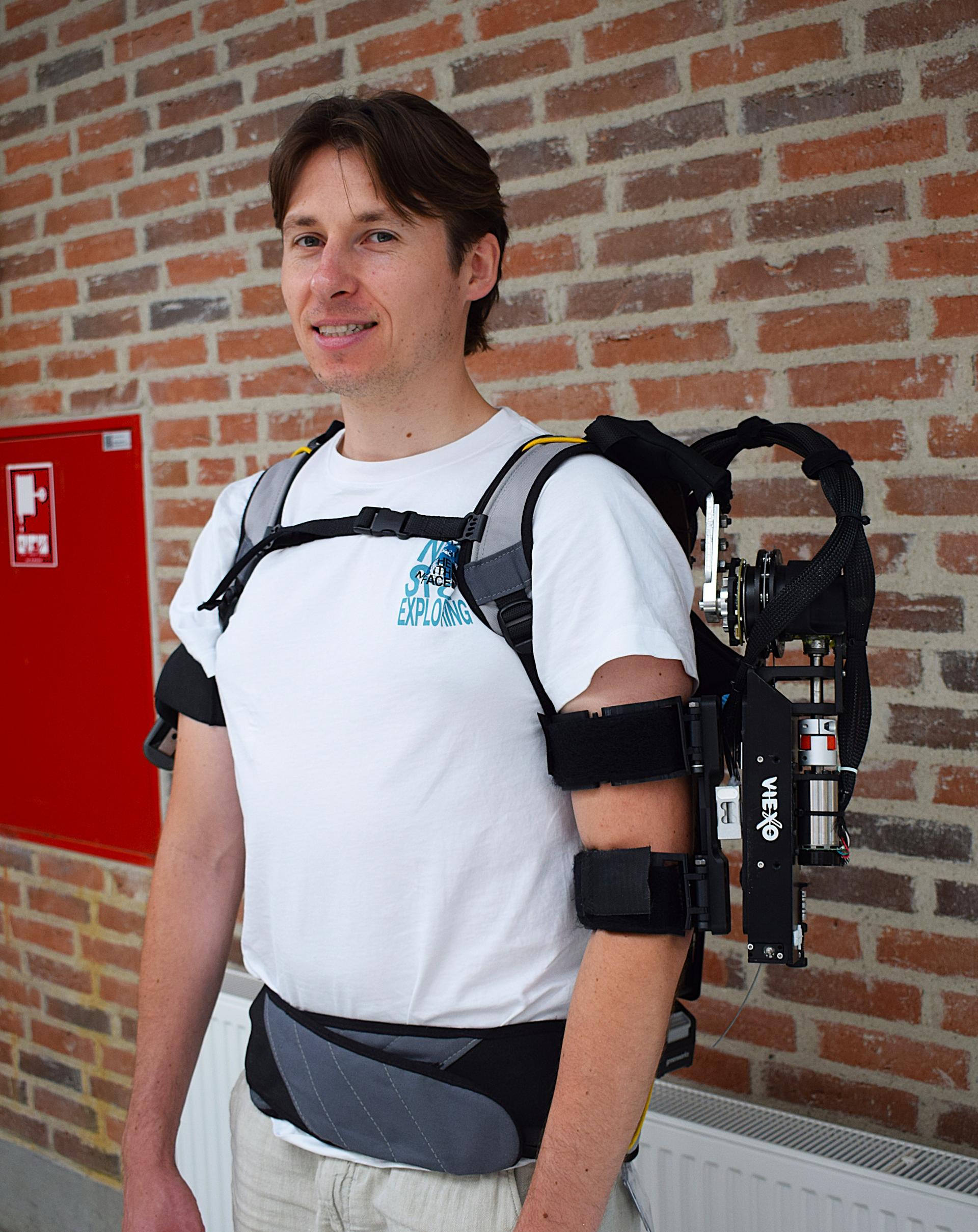
The resting views depict the participant in a neutral standing posture with the arm relaxed at the side, highlighting the overall fit, mass distribution, and visual profile of the device when no assistance is required. The loaded views capture the participant holding a hand-held weight with the arm in a flexed position, demonstrating the exoskeleton actively supporting the upper arm during a representative lifting task.
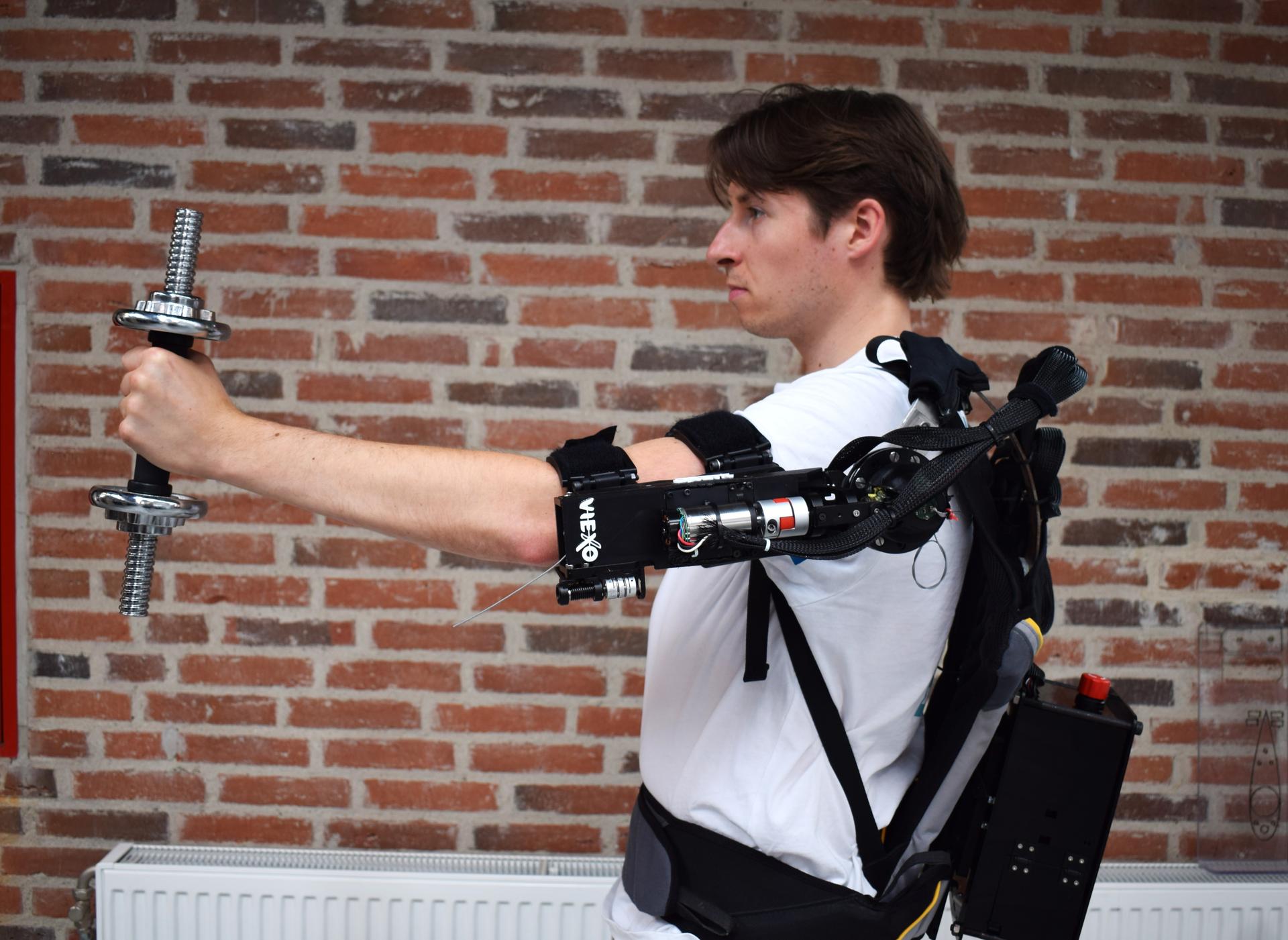
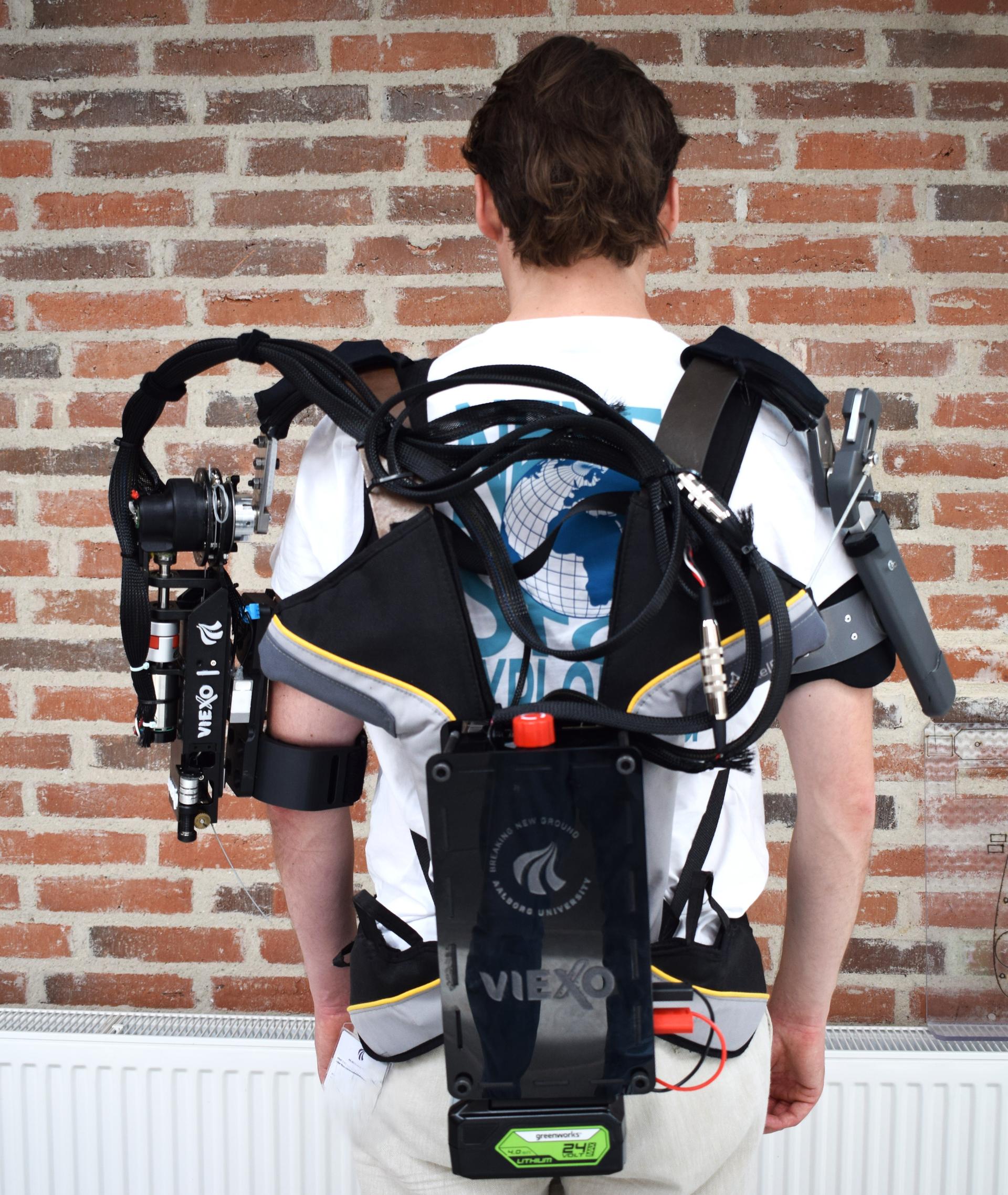
Together, these configurations provide a qualitative impression of the device under realistic use conditions, complementing the quantitative results obtained from the mechanical and physical testing campaigns described above.
Awards & Honors
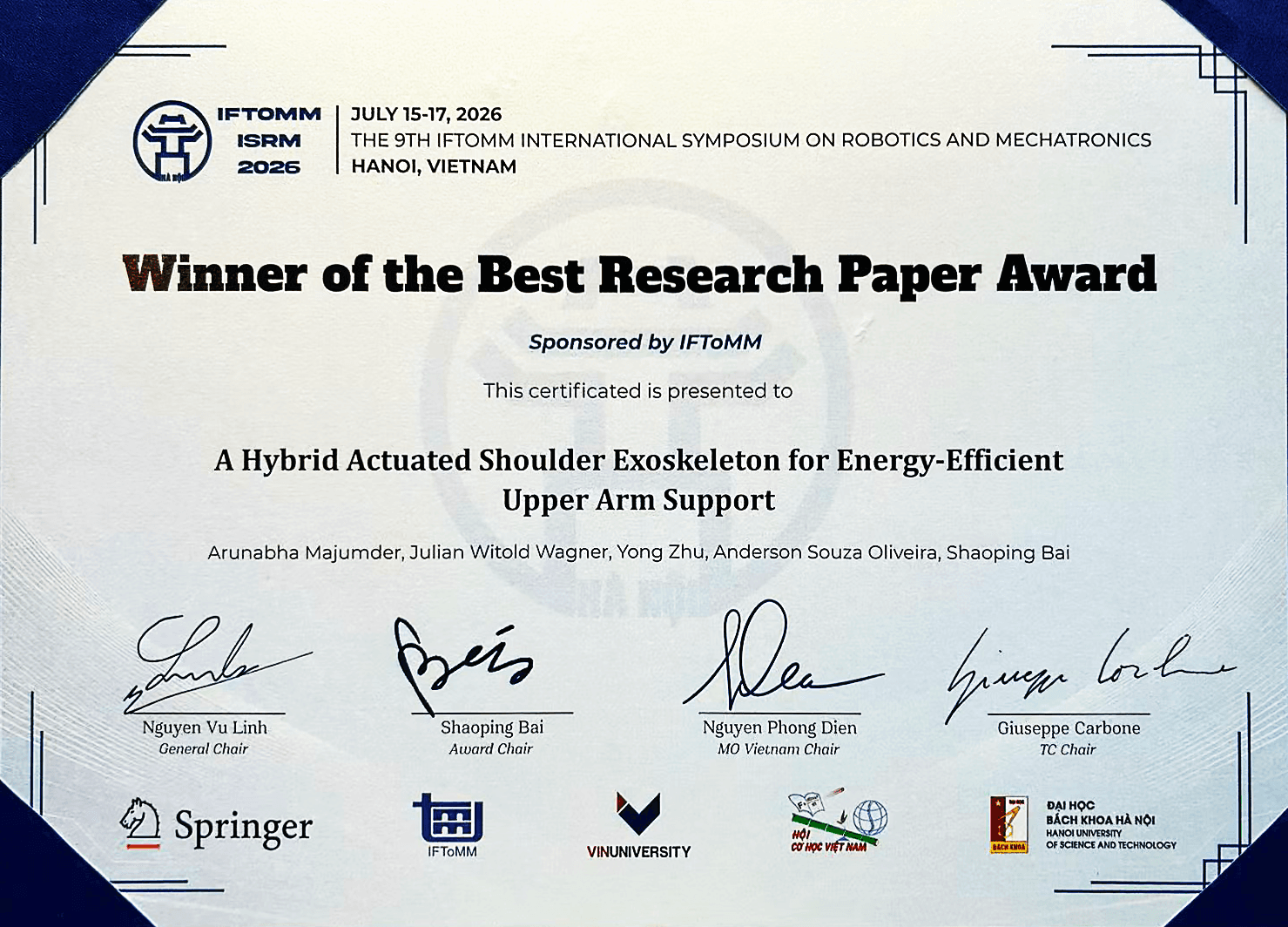
Our team is honored to receive the Best Research Paper Award at the 9th IFToMM International Symposium on Robotics and Mechatronics (ISRM 2026) in Hanoi, Vietnam!
Our paper, "A Hybrid Actuated Shoulder Exoskeleton for Energy-Efficient Upper Arm Support," explores new ways to optimize upper limb robotic assistance. Huge thanks to the IFToMM committee for this recognition!